


Jul 01, 2026
.png)
Dec 22, 2025
- Share on:


-
 copied
This is a series of blogs about the importance of being familiar with CPT coding guidelines. Often there is extensive guidance preceding a subsection or range of codes for particular procedures, but coders are very busy so sometimes they jump right into the codes without taking time to review these guidelines, even though following or not following their direction could significantly affect the accuracy and comprehensiveness of coding.
This series is designed to help you become familiar with guidelines for significant procedures that you might not be acquainted with but do impact coding. The presentations are short and meant to generate awareness of the guidelines that are available in CPT rather than the application of guidelines to specific coding scenarios.
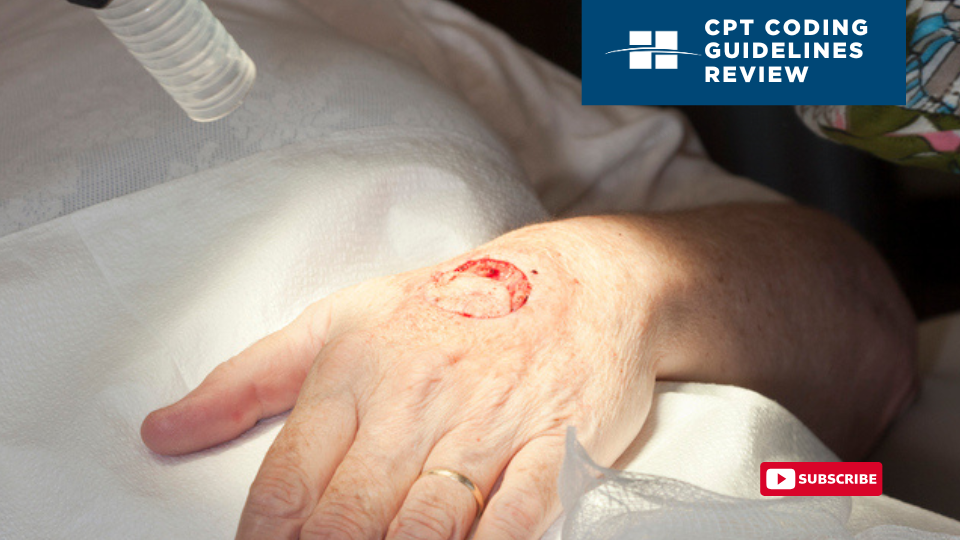
This installment of the series explores the guidelines related to CPT coding for skin replacement surgery.
CPT Guidelines Skin Replacement Surgery
Please watch this presentation to learn about the guidelines that provide direction in assigning CPT codes for skin replacement surgery.
Take Aways
- Most skin replacement surgeries include two reportable components
- Surgical preparation
- Topical application
- Measurements used to determine code selection are based on the size of the recipient area (wound/defect)
- Wound/defect size for multiple wounds is measured by summing the surface area of all wounds from anatomic sites that are grouped together into the same code descriptor.
- Do not sum together wounds of different groupings of anatomic sites
- Surgical preparation creates a clean wound bed free of nonviable tissue with the intent to heal the wound by primary intention
- Surgical preparation codes are assigned based on location and size of defect
- There are three reportable components to a skin cell suspension autograft:
- Harvesting the skin
- Preparation of the graft suspension
- Application of the graft suspension
- Skin cell suspension autograft codes include application to the wound and the donor site
- Autograft codes are assigned based on type of graft, location and size of defect
- Autograft codes include:
- Harvest and/or application of autologous skin graft
- Removal of current graft and simple cleansing of wound when performed
- Procedures separately reportable in addition to autografts include:
- Repair of donor site requiring skin graft or local flaps
- Debridement that meets specific criteria
- Skin substitute grafts codes are assigned based on location and size of defect
- Skin substitute graft codes include:
- Application of non-graft wound dressing
- Removal of current graft and simple cleansing of wound when performed
- Debridement meeting specific criteria is reportable in addition to application of skin substitute grafts
To find instruction in coding for skin graft procedures, explore the course Skin and Muscle Graft Coding in CPT Part 1 and Skin and Muscle Graft Coding in CPT Part 2 on our premier coding education platform, HIAlearn.com.


Test Your Knowledge
For detailed explanations of the quiz answers, please refer to the end of this blog post.
Additional Coding Education: Invest in You!
Be sure to watch for other installments of CPT Coding Guidelines Review and visit HIAlearn.com to explore other educational products designed to help coders be their best! Subscribe to our YouTube channel to be notified when the next video is live.

Quiz Answers and Rationale
Question 1: When coding for skin replacement surgery of multiple wounds, the size of the defect used in code selection is measured by summing together the surface area of all wounds from anatomic sites that are grouped together in the same code descriptor. Measurements used for code selection apply to the recipient site only. Defects are measured in cm2 for adults and children 10 and older. For infants and children under 10, defects are measured by percentage of body area.
Question 2: Skin cell suspension autograft procedures include harvesting of skin for use as graft material, preparation of the graft suspension, which includes manual mechanical disaggregation of the harvested skin and spray-on application of the prepared skin cell suspension autograft product. Skin biopsy is not included in this process.
Since 1992, HIA has been the leading provider of compliance audits, coding support services and clinical documentation audit services for hospitals, ambulatory surgery centers, physician groups and other healthcare entities. HIA offers PRN support as well as total outsource support.
The information contained in this coding advice is valid at the time of posting. Viewers are encouraged to research subsequent official guidance in the areas associated with the topic as they can change rapidly.
Need to Earn CEUs?
Our coding education platform, HIAlearn.com, offers courses related to this topic and many more. Subscribe today and access more than 230 courses accepted by AHIMA for CEUs, with a selection also accepted by AAPC.

