


Sep 28, 2026

Apr 13, 2026

- Share on:


-
 copied
Accurate clinical validation of Type 2 myocardial infarction (MI) requires more than elevated troponin levels. Coders and CDI professionals must evaluate the full clinical picture—including evidence of ischemia, underlying causes, and supporting diagnostic findings—to ensure compliance with the 4th Universal Definition of Myocardial Infarction.
This Coding Tip breaks down the key differences between myocardial injury, ischemia, and infarction, outlines required diagnostic criteria, and highlights documentation elements necessary for validating Type 2 MI. Through real-world scenarios, it demonstrates when a diagnosis is supported—and when a query is warranted—to strengthen coding accuracy and reduce compliance risk.
The myocardium is the heart muscle responsible for circulating blood via its pumping action. Oxygenated blood supply is delivered to tissues in the body via arteries and exchanged for deoxygenated blood delivered to the lungs. When the blood supply in the coronary arteries is reduced or blocked, the lack of circulating blood and oxygen has the potential to cause damage or even death to the heart muscle (myocardial infarction).
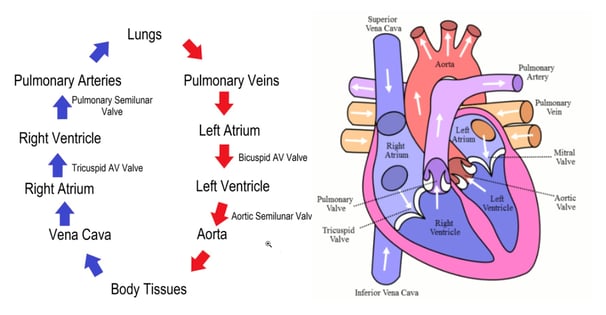
Image Courtesy of Wikimedia.org
Damage to the heart can be classified to several types including myocardial: injury, ischemia, or infarction.
Myocardial Injury - an acute elevation in cardiac troponin level with one value above the 99th percentile. Acute elevation of troponin level will show a rise and fall of troponin where as chronic elevation show persistent elevation.
-
Troponin: a protein found in the heart to help with contraction. Normal range is 0-0.4, if the heart muscle becomes damaged, troponin is released into the blood stream causing an elevation in troponin levels. Troponin 1 is found only in the heart muscle, Troponin T is found in heart and skeletal muscles. Hs-Troponin 1 and Hs-Troponin T are rapid test. In a myocardial infarction the troponin rises within 1 hour from onset of symptoms. Acute elevation of troponin level will show a rise and fall of troponin where as chronic elevation show persistent elevation.
The 4th Universal Definition of Myocardial Infarction published in 2018 by a global task force defines acute MI as acute myocardial injury when there is a rise and fall in troponin levels and at least ONE value above 99th percentile upper reference limit (URL) occurring with at least ONE other diagnostic criteria for evidence of acute myocardial ischemia (symptoms, ECG changes, imaging evidence of coronary thrombus).
-
The 99th percentile upper reference limit (URL) – a standardize threshold from a healthy population for diagnosing myocardial injury, 99% chance of being a true positive.
Myocardial Ischemia – reduced blood flow causing insufficient oxygen to coronary arteries increasing risk for ischemia but has not caused cell damage. Diagnostic criteria includes symptoms, new EKG changes, or imaging.
- Symptoms: chest pain characterized as pressure, heaviness, or tightness, jaw pain, epigastric discomfort, arm pain, dyspnea at rest or exertion, nausea, vomiting, fatigue, palpitations, syncope, diaphoresis
- Electrocardiogram (ECG/EKG): evaluates the function of the heart by recording electrical signals that show rhythm and rate. If prior EKG is available, look for new ischemic changes:
- STT changes
- ST depression
- T wave inversion
- New LBBB
- ST- segment elevation in specific leads (seen in STEMI).
- Echocardiogram: evaluates the structure of the heart using sound waves in moving images of the chambers, valves, and blood flow. It can identify heart damage, how well the heart pumps, valvular stenosis and weakness. Look out for wall motion abnormalities.
- Magnetic Resonance Imaging (MRI): evaluates diseases, damage to muscles, and blood flow by using a magnetic field and radio waves.
- Cardiac Catheterization: a minimally invasive test utilizing a catheter maneuvered through the blood vessels to identify narrowing and/or blockages in the heart. Evidence includes clot or thrombus present in the coronary arteries.
Myocardial Infarction (Heart Attack) – reduced blood flow/insufficient oxygen to coronary arteries causing permanent cell damage and/or cell death.
- Type 1 STEMI/NSTEMI –complete blockage, thrombus, or plaque rupture in coronary arteries. Diagnostic criteria requires acute MI injury and ischemic evidence. It is caused by coronary artery disease (CAD), characterized as hard narrow arteries due to cholesterol build up. Type 1 STEMI requires immediate reperfusion or percutaneous coronary intervention on the contrary to Type 1 NSTEMI may present with mild symptoms and is less evident.
 Image Courtesy of Wikimedia.org
-
Type 2 MI: decrease in blood flow causing an oxygen supply-demand imbalance not related to CAD requires treating the underlying cause.
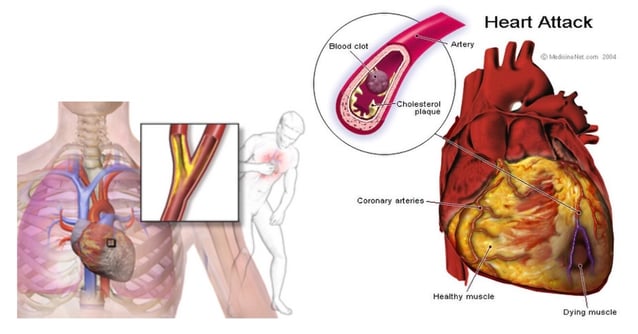 Image Courtesy of AHAjournals.org
This article focuses on Type 2 MI which is acute myocardial injury and evidence of acute myocardial ischemia caused by conditions other than CAD such as:
- severe hypotension
- severe anemia
- sustained bradycardia
- coronary spasm
- shock
- atrial fibrillation or tachyarrhythmia
Documentation
CDI confirmation of diagnostic criteria for Type 2 MI requires reviewing the attending and cardiology notes (symptoms), procedure notes (cardiac cath), imaging notes (echo), diagnostic testing reports (EKG), lab reports (troponin), and medication administration records in the CDI. Searching for key words describing chest pain in progress notes is vital for Type 2 MI clinical evidence.
| Diagnostic Test | EHR Section | EHR Tabs |
| Troponin Level Laboratory | Laboratory | Cardiac Enzyme |
| EKG | Diagnostics | Cardiology |
| Echocardiogram, TEE | Imaging | Cardiology |
| Cardiac Catheterization | Procedures | Cardiovascular |
Treatment for Type 2 Myocardial Infarction
Treatment for Type 2 MI requires first, excluding coronary causes and then treating the underlying condition such as:
- Severe hypotension: IV fluid bolus, vasopressor medication to constrict blood vessels
- Severe anemia: Blood transfusion, iron therapy
- Sustained Bradycardia: Atropine, Pacemaker
- Coronary spasm: Nitrates, calcium channel blockers to relax arteries
- Atrial fibrillation: anticoagulants to thin out the blood, betablockers to slow heart rate, cardioversion
- Shock: vasopressors, electrolyte infusion, IV fluids, blood transfusion, antibiotics
Important To Note
Elevated troponins alone cannot be used to clinically validate myocardial infarction; there must be evidence of ischemia to meet the 4th Universal Definition of Myocardial Infarction Criteria for STEMI, NSTEMI, and Type 2 MI. Remember, STEMI and NSTEMI occur in patients with underlying CAD, while Type 2 MI results from oxygen supply and demand mismatch not related to CAD. Not all elevated troponins are cardiac as seen in patients with acute conditions such as rhabdomyolysis where large amounts of skeletal muscle are broken down releasing troponin into the bloodstream. Also seen in chronic conditions such as CKD where the kidney cannot excrete troponin properly causing increase levels in the blood. Another example is blunt trauma causing direct damage to heart muscle as seen in chest contusion.
Scenarios
The following case studies illustrate clinical validation of Type 2 Myocardial Infarction, from a CDI Perspective.
SCENARIO 1
H&P: 56-year-old male complaining of chest pain, dizziness, feeling tired found to have bloody stools at home. Oder for cardiac troponin, CBC, BMP, EKG, and echocardiogram, inpatient admission for melena and anemia. Consult GI for possible EGD/Colonoscopy evaluation. Patient afebrile, HR 104, RR 18, BP 89/43, WBC 9.3, H&H 7.3/22.5, elevated troponin levels. Found to be hypotensive, initiate LR bolus and type and crossmatch for 1 unit PRBC transfusion, start Protonix.
GI consult: Patient admitted with melena and acute blood loss anemia. Repeat H&H 6.9./19, additional unit of PRBC to be transfused. EGD with evidence of gastric peptic ulcer with oozing, bleeding controlled with argon plasma coagulation. No need for colonoscopy at this time.
DS: Admitted with Acute bleeding gastric ulcer s/p APC now resolved. Type 2 MI secondary to acute blood loss anemia resolved post 2 units of PRBCs. Hypotension resolved with LR bolus and PRBC transfusion. H&H in stable condition, VS WNL, prescription for 14 day course of Prilosec available in patients chart. Follow up with primary in one week. Advised to seek immediate medical attention if feels faint or bloody stools return.
Clinical Indicators: Chest pain HS-Troponin 1: 83, 139, 651, 543, 380, 299
Treatment: Protonix, PRBC transfusion, LR bolus, EGD with APC
Can CDI code the diagnoses of Type 2 Myocardial Infarction using the diagnostic criteria?
YES! This scenario meets the 4th Universal Definition of Myocardial Infarction Criteria for Type 2 MI
Treatment: PRBC transfusion, control of bleeding, LR bolus |
SCENARIO 2
H&P: 63-year-old female with history of ovarian cancer, Type 2 DM with CKD stage 4, chronic heart failure presented with dyspnea on exertion and worsening pedal edema. Not compliant with diuretics in the past. CXR with evidence of acute pulmonary edema and pleural effusion. Admitted with exacerbation of diastolic CHF and elevated troponin due to CKD, continue Farxiga, initiate IV Lasix at 20 mg BID, fluid restriction, low sodium diet.
Cardiology: Patient is been seen for diastolic congestive heart failure exacerbation, she has a history of medication non compliance, dyspnea now resolved. Switch from intravenous BID Lasix to oral 20 mg Lasix daily.
DS: Acute diastolic CHF and Type 2 MI secondary to CKD resolved. Repeat troponin within normal range upon discharge, transition to oral furosemide. Discharge home in stable condition, follow up with Primary in one week.
Clinical Indicators Framingham: acute pulmonary edema, pleural effusion, DOE, swelling in lower extremities Troponin: 0.29, 0.54, 0.46, 0.43, 0.39, 0.26 VS: HR 104, RR 18, BP 120/67 EKG: Normal sinus rhythm Echocardiogram: EF 55%, no regional wall motion abnormalities CXR lungs without infiltrate, evidence of acute pulmonary edema and pleural effusion.
Treatment: IV Lasix, Farxiga, fluid restriction, low sodium diet
Can CDI code the diagnoses of Type 2 Myocardial Infarction using the diagnostic criteria?
NO! This scenario does not meet Type 2 Myocardial Infarction
Query Opportunities: Does not meet criteria for Type 2 MI – a query is warranted for clinical validation of documented diagnosis. |
Conclusion
The 4th Universal Definition of Myocardial Infarction defines MI as acute myocardial injury with clinical evidence of acute myocardial ischemia. Query the provider to clarify vague, missing, or conflicting documentation.

References
- ICD-10-CM Official Guidelines for Coding and Reporting FY 2026 – Chapter 9 Diseases of the Circulatory System
- CDI Pocket Guide by Pinson & Tang- Myocardial Injury, Ischemia, Infarction
- https://commons.wikimedia.org
- American Heart Association, https://www.heart.org/en/health-topics/heart-attack/about-heart-attacks/silent-ischemia-and-ischemic-heart-disease
- American Heart Association, https://www.heart.org/en/health-topics/heart-attack/about-heart-attacks
- American College of Cardiology - Fourth Universal Definition of Myocardial Infarction https://www.acc.org/latest-in-cardiology/ten-points-to-remember/2018/08/24/00/09/fourth-universal-definition-of-mi-esc-2018
- AHA/ASA Journals Assessment and Treatment of Patients With Type 2 Myocardial Infarction and Acute Nonischemic Myocardial Injury https://www.ahajournals.org/doi/10.1161/CIRCULATIONAHA.119.040631
FAQ
For the past 30 years, HIA has been the leading provider of compliance audits, coding support services and clinical documentation audit services for hospitals, ambulatory surgery centers, physician groups and other healthcare entities. HIA offers PRN support as well as total outsource support.
The information contained in this coding advice is valid at the time of posting. Viewers are encouraged to research subsequent official guidance in the areas associated with the topic as they can change rapidly.
Need to Earn CEUs?
Our coding education platform, HIAlearn.com, offers courses related to this topic and many more. Subscribe today and access more than 230 courses accepted by AHIMA for CEUs, with a selection also accepted by AAPC.

