


Jul 01, 2026
.png)
Dec 01, 2025

- Share on:


-
 copied
Interventions for endovascular revascularization of the lower extremities for the treatment of occlusive disease are coded according to the vascular territory in which they are performed. Until now, there have been three vascular territories for which procedures can be reported. The release of the 2026 CPT codes brings a fourth territory, the inframalleolar, which allows for reporting of procedures performed in arteries below the ankle. Additionally, changes have been made to the vessel designations included in the femoral and popliteal vascular territory.
What are the Vascular Territories?
Prior to 2026, the section of codes for endovascular revascularization of lower extremities were divided into three vascular territories. The addition of the inframalleolar territory brings that number to four. The vascular territories are:
- Iliac
- Femoral and Popliteal
- Tibial and Peroneal
- Inframalleolar
Territories divide the arteries of the legs and feet into collections of anatomically related arteries considered together for coding purposes. Each vascular territory has its own specific coding guidelines.
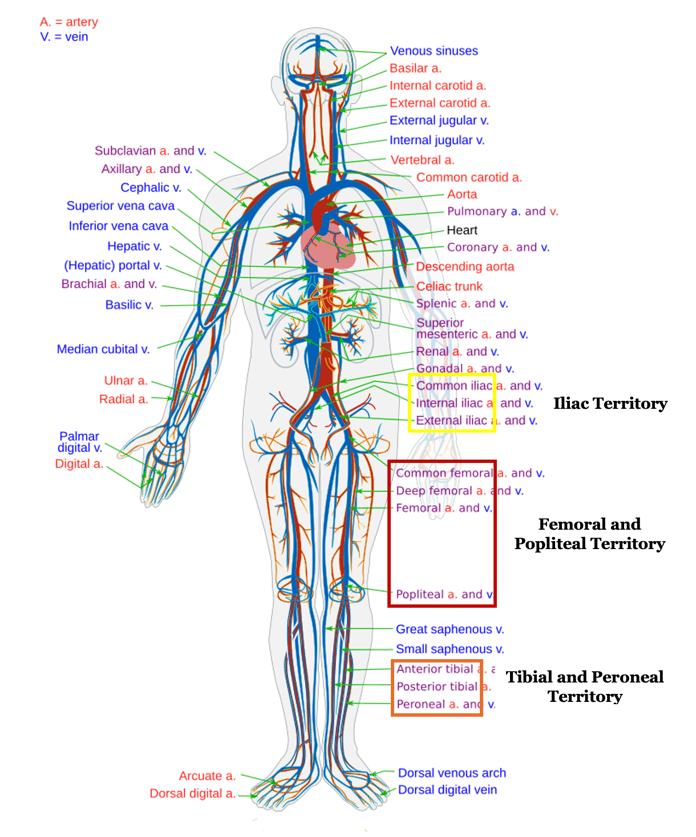
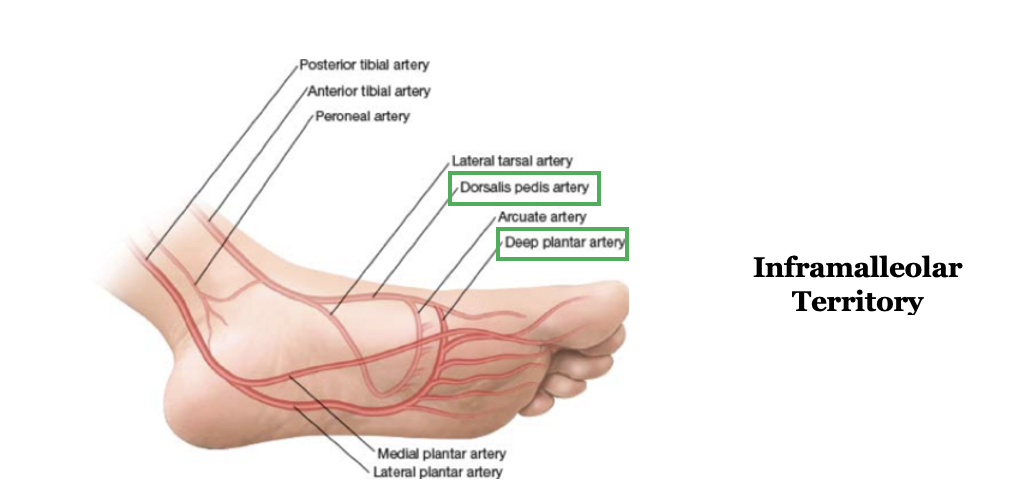
https://wisc.pb.unizin.org/paanatomyunit4/chapter/blood-supply-to-the-leg-and-foot/
Coding by Distinct Vessel
Territories are further divided into distinct vessels for which a primary intervention code may only be reported once. It’s important to recognize that a “vessel” is not necessarily equal to a single artery. For the purpose of code selection, a vessel may consist of one or more arteries. Previously all four arteries in the femoral and popliteal territory were considered a single vessel for the purpose of code assignment. As of 2026 the arteries included in this territory have been divided into two separate vessels for coding. The common femoral artery and the profunda femoris artery are considered together as one vessel and the superficial femoral and popliteal comprise the second vessel.
This table outlines the distinct vessels in each vascular territory.
| Territory | Distinct Vessels for Coding Purposes |
Iliac (37524 -37262)
|
Common iliac |
| External iliac | |
| Internal iliac | |
Femoral and Popliteal (37263-37279)
|
Common femoral Profunda femoris (deep femoral) |
| Superficial femoral Popliteal |
|
Tibial and Peroneal (37280-37295)
|
Anterior tibial |
| Posterior tibial | |
| Peroneal | |
Inframalleolar (37296 -37299)
|
Dorsalis pedis |
| Plantar |
Get the Full Story
The addition of a new vascular territory and the division of the arteries in the femoral and popliteal territory into two vessels are only the beginning of the changes to the codes for endovascular revascularization. 2026 brings a complete overhaul to this section with all 16 previous codes being deleted and replaced with 46 new codes. The guidelines have been updated substantially and new terminology has been introduced. For complete coverage of the changes and updates to these codes, visit HIALearn to take the course Endovascular Revascularization of Lower Extremities Coding in CPT. This course provides the crucial information needed for accurate coding of these procedures beginning January 1, 2026!

References
- 2026 CPT Code Manual
The information contained in this post is valid at the time of posting. Viewers are encouraged to research subsequent official guidance in the areas associated with the topic as they can change rapidly.
Need to Earn CEUs?
Our coding education platform, HIAlearn.com, offers courses related to this topic and many more. Subscribe today and access more than 230 courses accepted by AHIMA for CEUs, with a selection also accepted by AAPC.

